Description
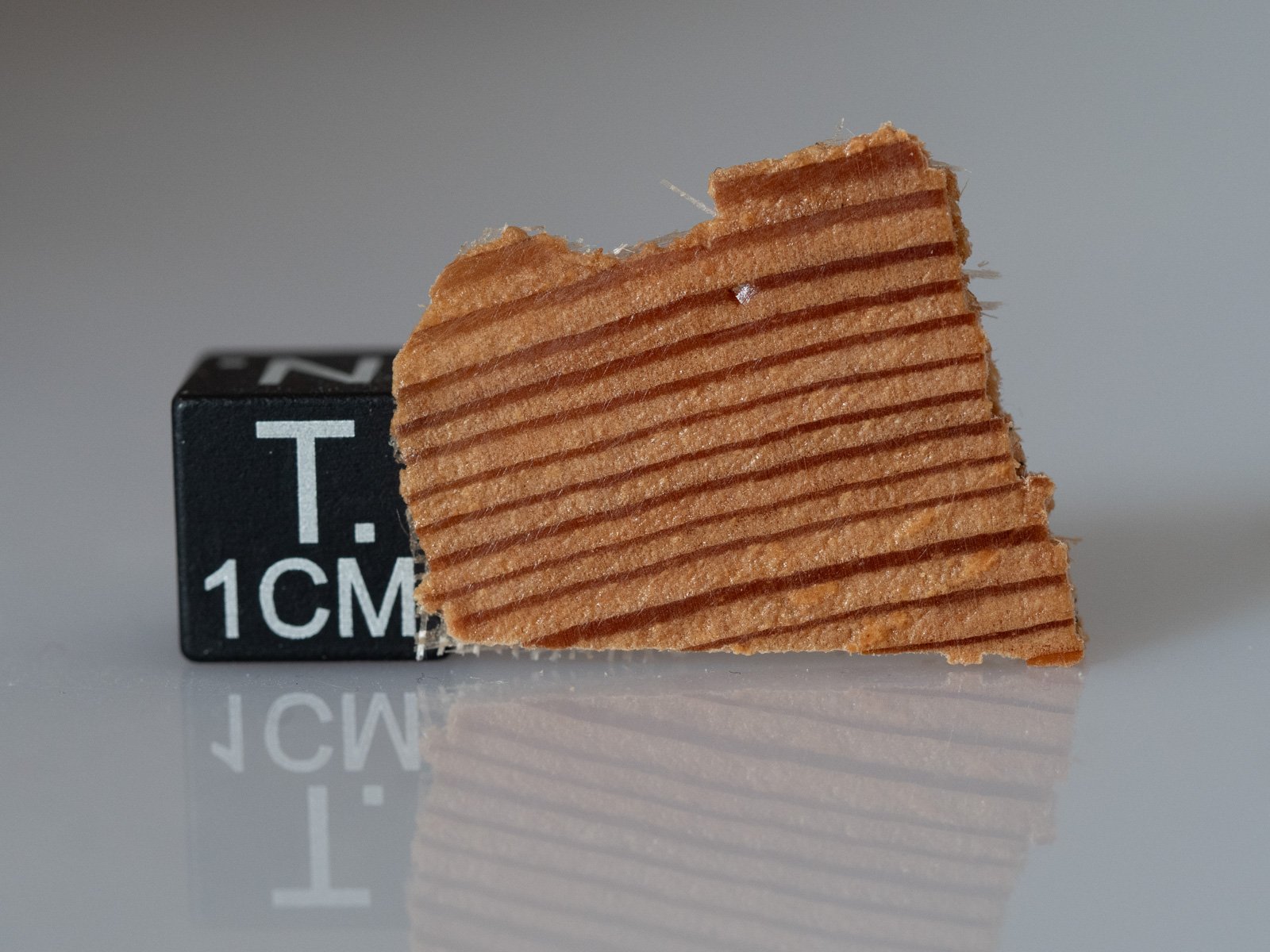
Tunguska wood fragment sold in a Riker box with label and certificate.
Size of wood fragment : 2.3 x 1.8 cm
Provenance : 1991 expedition (University of Bologna, Italy)
On 30 June 1908 N.S. (cited as 17 June 1908 O.S. before the implementation of the Soviet calendar in 1918), at around 7:17 a.m. local time, Evenki natives and Russian settlers in the hills northwest of Lake Baikal observed a bluish light, nearly as bright as the Sun, moving across the sky and leaving a thin trail. Closer to the horizon, there was a flash producing a billowing cloud, followed by a pillar of fire that cast a red light on the landscape. The pillar split in two and faded, turning to black. About ten minutes later, there was a sound similar to artillery fire. Eyewitnesses closer to the explosion reported that the source of the sound moved from the east to the north of them. The sounds were accompanied by a shock wave that knocked people off their feet and broke windows hundreds of kilometres away.
The explosion registered at seismic stations across Eurasia, and air waves from the blast were detected in Germany, Denmark, Croatia, and the United Kingdom – and as far away as Batavia, Dutch East Indies, and Washington, D.C. It is estimated that, in some places, the resulting shock wave was equivalent to an earthquake measuring 5.0 on the Richter scale.
Since the 1908 event, an estimated 1,000 scholarly papers (most in Russian) have been published about the Tunguska explosion. Owing to the site’s remoteness and the limited instrumentation available at the time of the event, modern scientific interpretations of its cause and magnitude have relied chiefly on damage assessments and geological studies conducted many years after the event. Estimates of its energy have ranged from 3–30 megatons of TNT (13–126 petajoules).