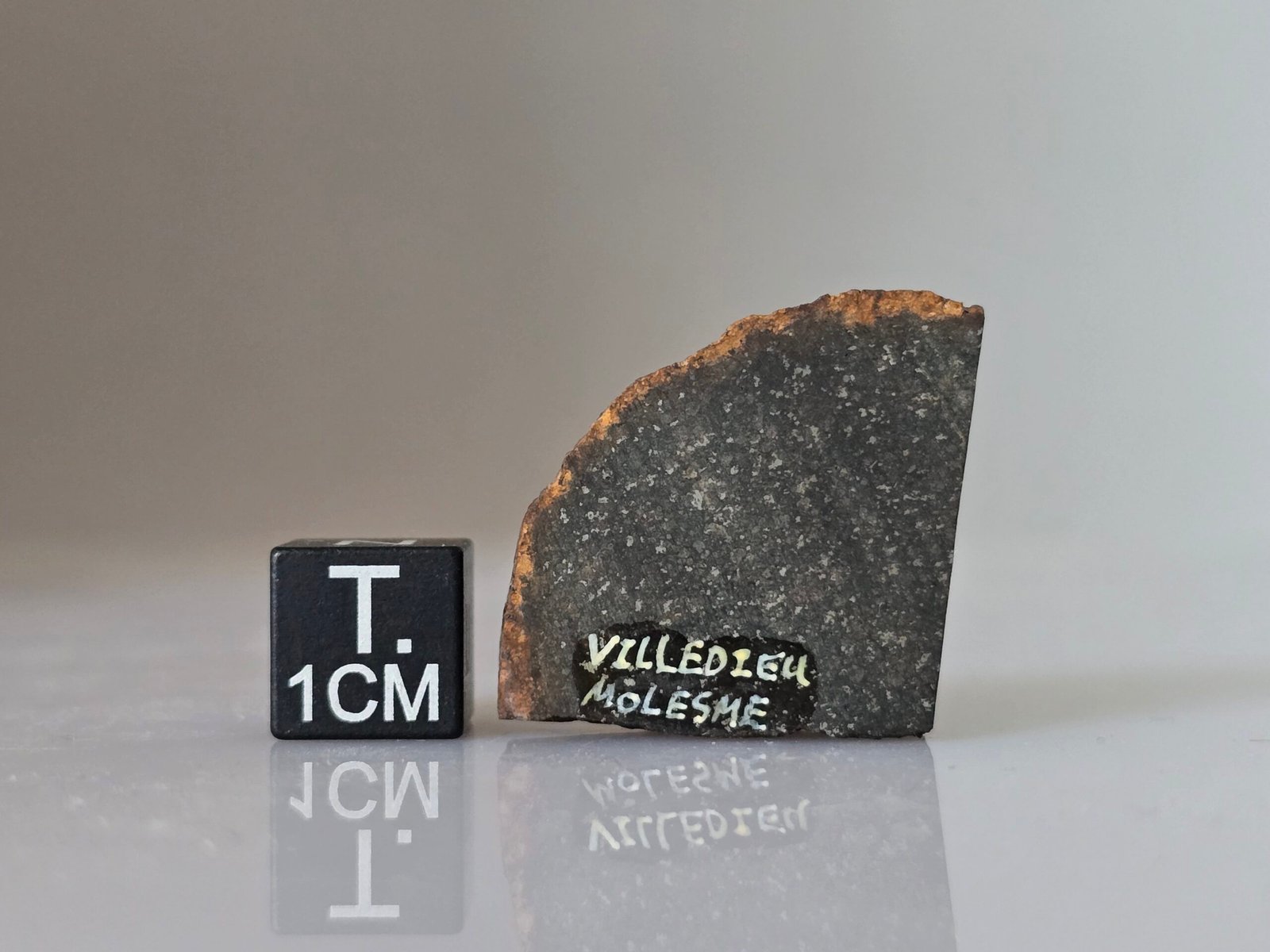
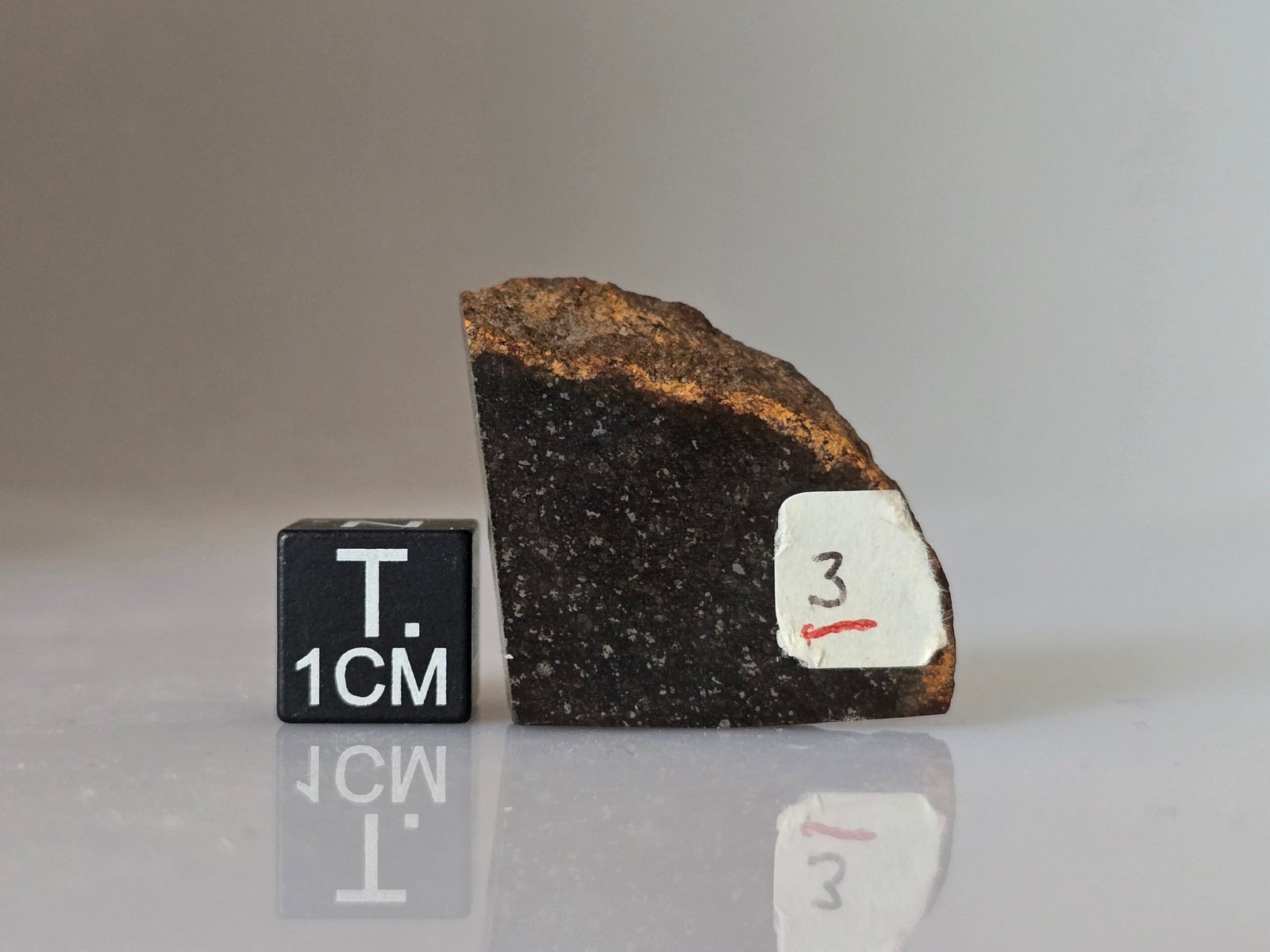



Description
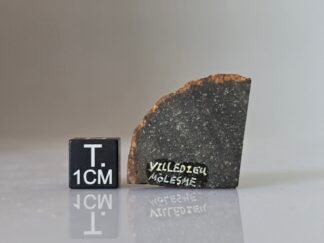
Really hard to get meteorite. Great provenance. Sold in a box with label/certificate.
Around 1890—on either May 28 or June 1—at approximately 9 p.m., Mr. Victor Vaucher was returning home to Molesme after attending a celebration in Villedieu when he heard a loud bang, like a thunderclap, accompanied by an incandescent meteor streaking across the sky. He tracked it with his eyes and saw it land at a spot known as Le Tertre; it appeared to be tumbling down the hillside leading to the La Motte ponds. It was near these ponds that Mr. Vaucher subsequently recovered the mysterious stone.
In 1926, Alfred Lacroix published a note on the Villedieu meteorite in the *Comptes rendus de l’Académie des sciences*. The text reveals that a certain Mr. C. Courtois—who was conducting research on iron ores in the Châtillon region at the time—received the stone, which was presented to him as “a block with a limonitic appearance.” Polishing a section of the stone revealed metallic particles. Suspecting it might be a meteorite, he contacted A. Lacroix. Once Lacroix confirmed this, Mr. Courtois contacted Mr. Pion Rollin, who in turn investigated the circumstances of the fall.
We know the meteorite was recovered (picked up) around 1890 at Le Tertre, based on a witness interviewed by Mr. Pion Rollin; this witness recalled his great-uncle recounting how, “some thirty years” prior, Mr. Victor Vaucher had witnessed the fall. The stone was subsequently placed on a courtyard wall in Mr. Pion Rollin’s presence. At that time, the meteorite had a “bronzed appearance, as if it had just come from a forge.” Mr. Pion Rollin located it again much later (likely shortly before the publication of Lacroix’s 1926 note). The stone was then covered with moss and lichen. Subsequently, the meteorite was taken to the Châtillon-sur-Seine museum before joining the collections of the MNHN in Paris.