Description
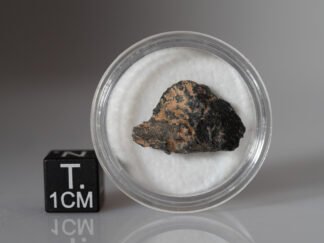
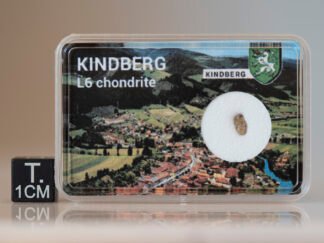
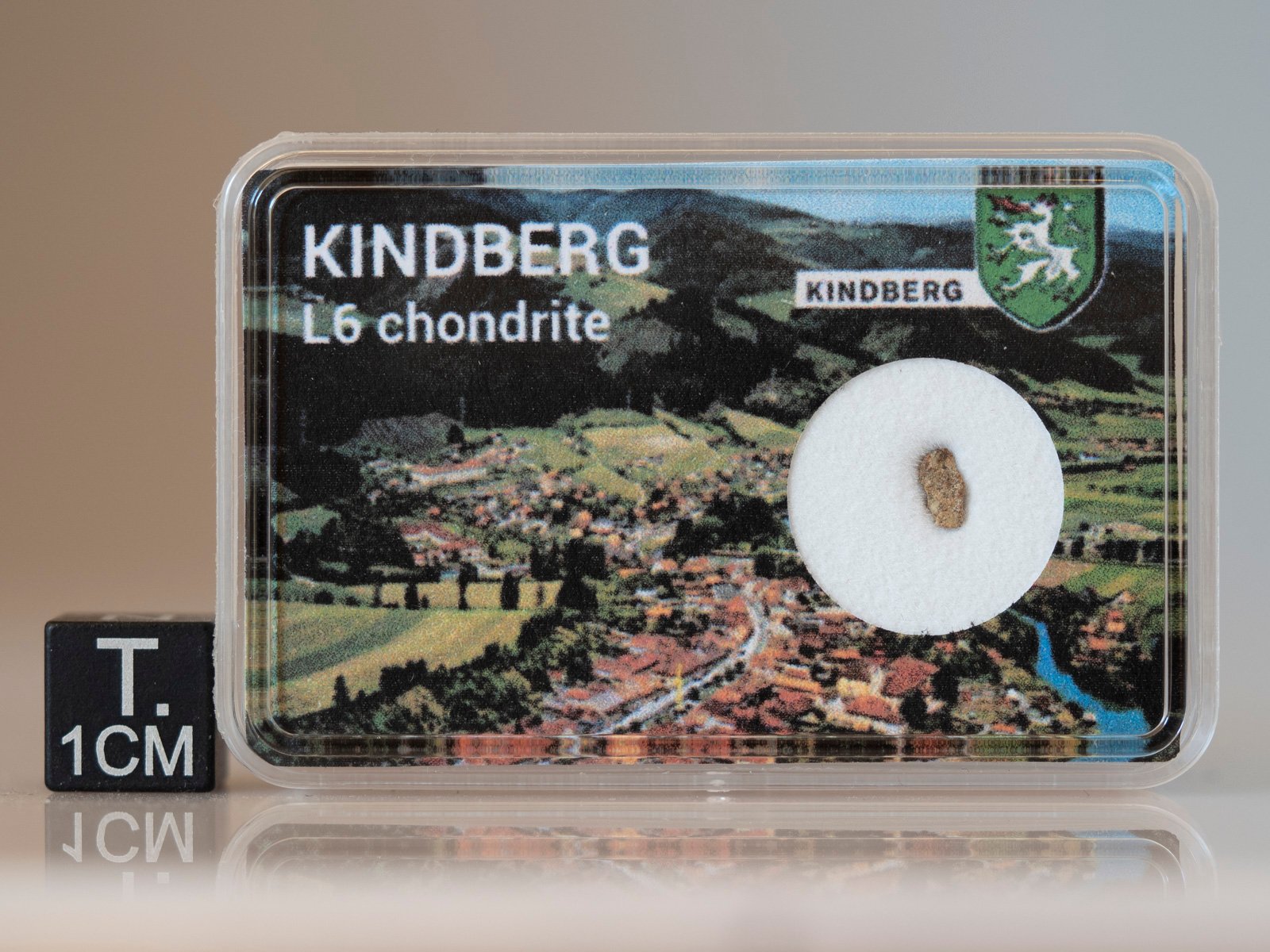
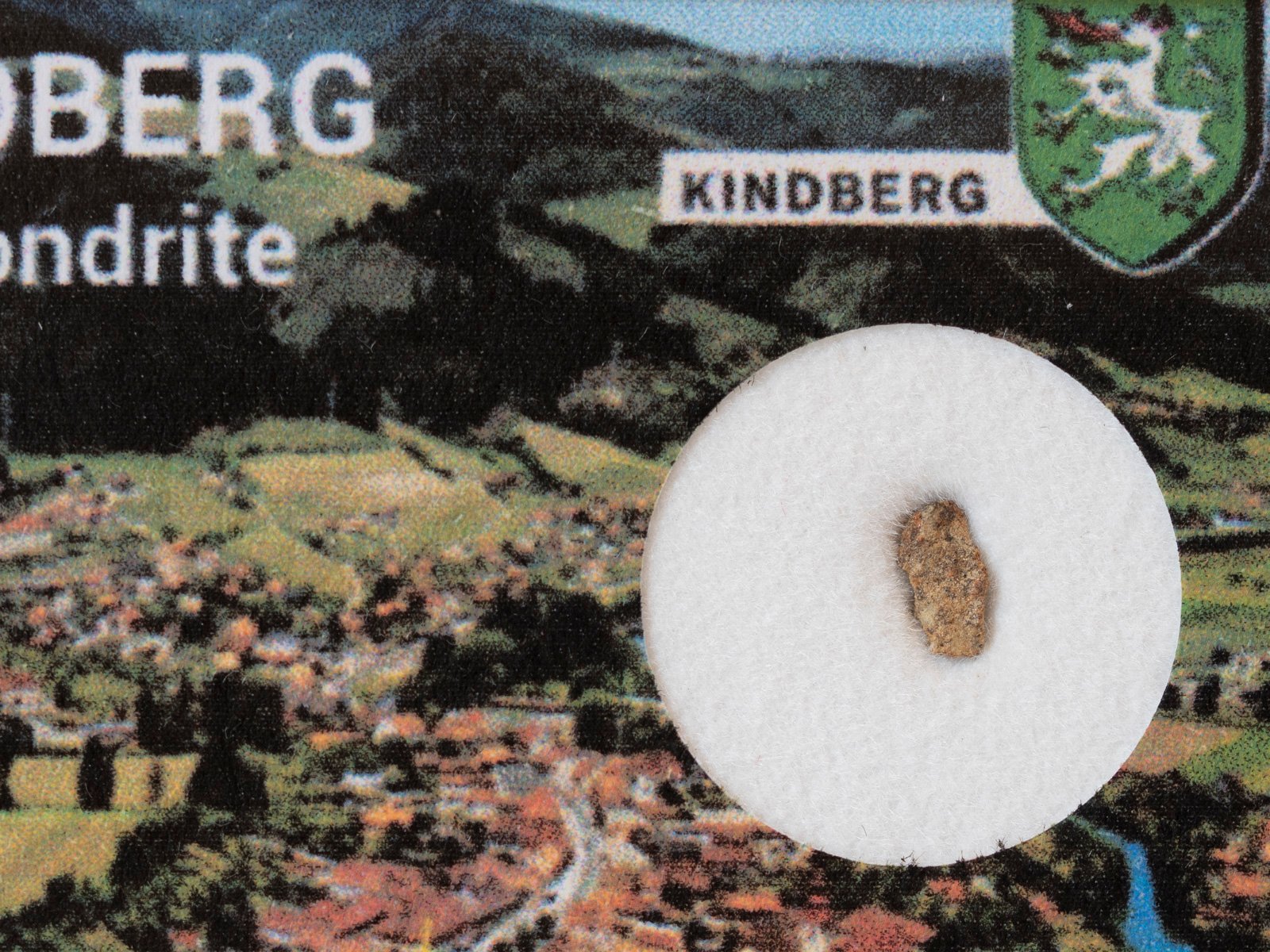
0.03g fragment
Sold with photo, label/certificate
This is really an unobtainium, I sell probably the two only fragments on the market.
Kindberg 47°31’N, 15°26’E
Steiermark, Austria
Confirmed fall: 2020 Nov 19
Classification: Ordinary chondrite (L6)
History: At 4:46 a.m. CET on November 19, 2020, a bright fireball was observed over Austria by a large number of eyewitnesses in Germany, Austria, and Italy. The fireball was also captured by a number of specialized cameras, from the AllSky7 fireball network, the Fireball Recovery and InterPlanetary Observation Network (FRIPON), and the European Fireball Network. Using recordings of the European Fireball Network, Pavel Spurny (CzAS) and colleagues estimated that some fragments may have landed within a mountainous area, about 50 km long and up to 3 km wide, located between the municipalities of Lunz am See (Lower Austria) and Kindberg (Styria). In the next days and weeks, Ludovic Ferrière (NHMV) organized search campaigns involving friends and colleagues of the NHMV, and informed the local persons via distribution of pamphlets and a media campaign. The first and only meteorite fragment (233.1 g) so far (as of August 2021) was found on July 4, 2021, by an anonymous local resident, on the side of his private forest trail, in the municipality of Kindberg (Styria, Austria).
Physical characteristics: Physical Characteristics: The fragment, 233.08 g (8.1 × 5.2 × 3.2 cm), is covered (1/3) by a dark brownish fusion crust with limited oxidation points. On the broken surface a network of thin dark shock veins cross-cutting the light greyish interior of the meteorite is visible. Orange-brownish oxide rims formed around metal grains indicate a low weathering stage.
Petrography: (L. Ferrière and J. Roszjar, NHMV). Based on the study of two polished sections, Kindberg is a weakly shocked meteorite showing a dense, recrystallized texture in which extremely rare chondrules (two barred olivine chondrules up to 1 mm in diameter seen) can be distinguished under the microscope. The interstitial space between olivine grains is mostly occupied by low-Ca pyroxene, plagioclase (up to 150 µm for the largest ones), and minor clinopyroxene (augite). Metal (kamacite, taenite, and tetrataenite; some showing thin intergrowths) and sulfide (troilite; up to 800 µm) grains co-exist. Other phases are chromite (up to 500 µm), chlorapatite (heavily fractured, up to 250 µm), and merrillite (up to 450 µm for the largest one detected). Several thin shock veins cross the meteorite. Olivine grains show undulatory extinction as well as planar fractures and most pyroxene and plagioclase grains also show undulatory extinction. In view of all these observations, we infer a shock stage S3.
Geochemistry: (L. Ferrière and J. Roszjar, NHMV). Mineral composition by Electron Microprobe analyses. Olivine: Fa24.90±0.37 (24.11-25.83) and Fe/Mn: 49.20±3.11 (n=31). Low Ca-Pyroxene: Fs20.70±0.26Wo1.55±0.11 (Fs20.28-21.23Wo1.37-1.78) and Fe/Mn: 29.51±1.63 (n=27). Augite: Fs8.03±0.15Wo43.66±0.10 (Fs7.92-8.14Wo43.59-43.74) and Fe/Mn: 21.66±0.35 (n=2). Plagioclase: An9.92±0.40Ab84.42±1.23Or5.66±1.08 (An9.34-10.85Ab81.13-86.73Or3.58-8.11) (n=45). Kamacite: Ni 6.57±2.90 (2.89-14.86), Co 0.82±0.12 wt% (n=80). Taenite: Ni 31.20±5.27 (21.58-40.15), Co 0.29±0.11 wt% (n=39). Tetrataenite: Ni 51.25±2.22 (46.07-54.50), Co 0.14±0.03 wt% (n=17). Troilite: Fe 62.21±0.38 (61.56-62.94) wt% (n=14). Chromite: Cr#: 0.88, Fe#: 0.89 (n=38). Cosmogenic radionuclides (P.P. Povinec, CUB): Gamma-spectrometry carried out in July-August 2021 showed the presence of the following radionuclides: 57Co, 54Mn, 22Na, and 26Al. Recalculated to November 19, 2020, 22Na was 99±7 and 26Al was 60±6 (both in dpm/kg). The activity ratio of 1.65±0.20 is consistent with a fall on that date.
Classification: Ordinary Chondrite (L6), S3, W1
Specimens: The main mass (194 g) is with the anonymous finder. Two fragments, 28.2 g (i.e., the type specimen) and 2.8 g, respectively, as well as one polished thick section (NHMV-O2306) and a polished thin section (NHMV-O2307) are at NHMV.