


Description
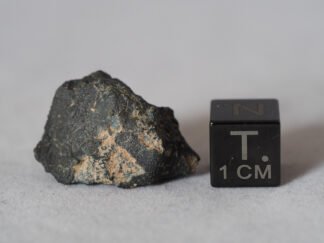
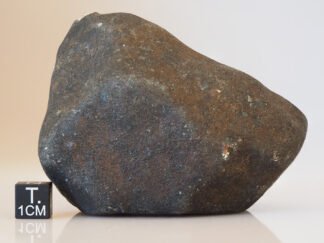
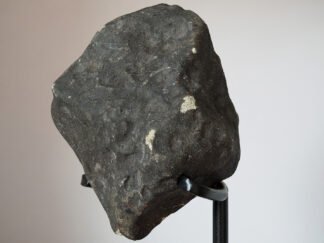
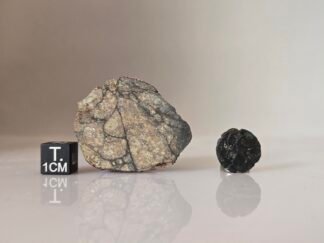
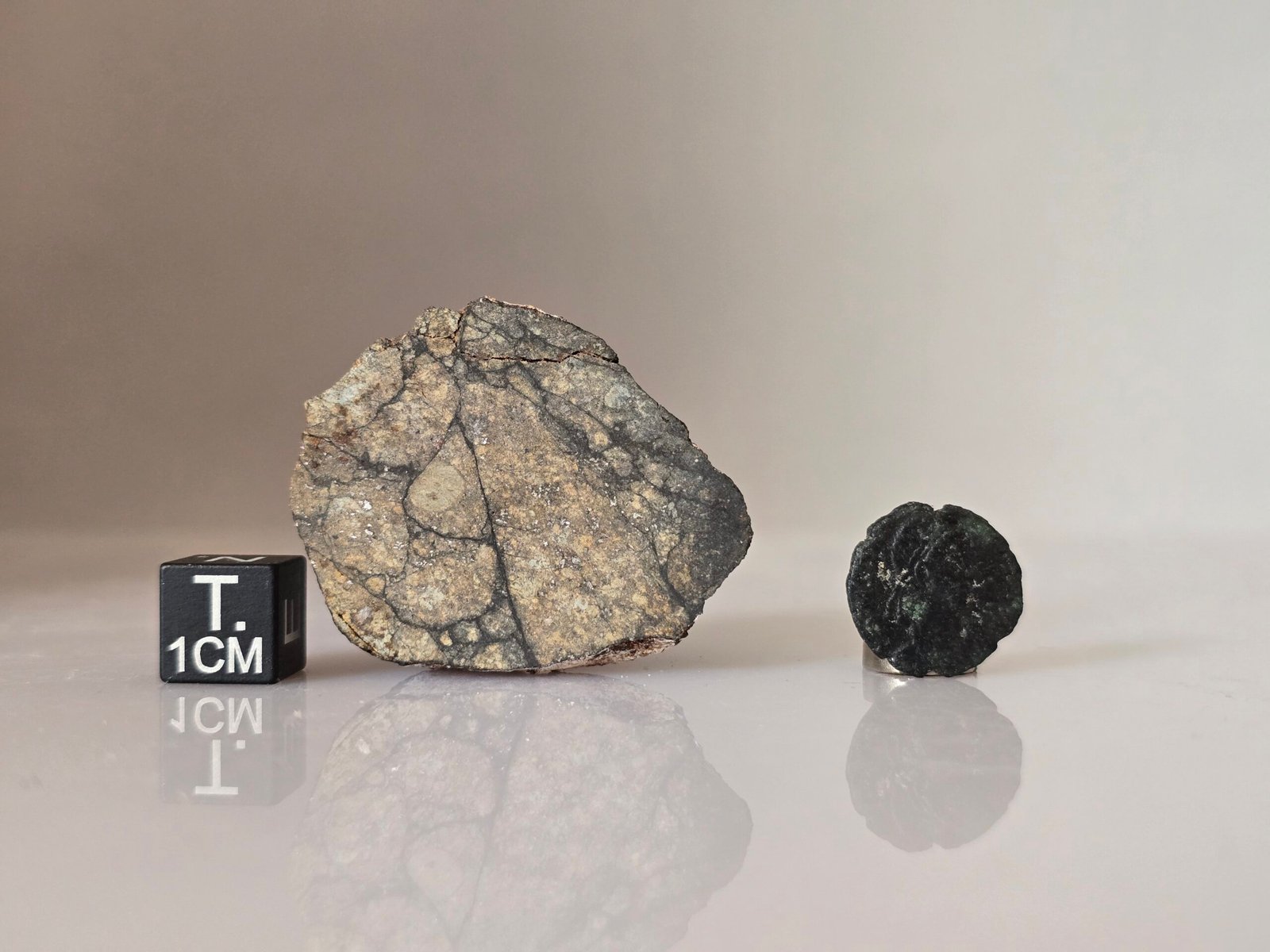
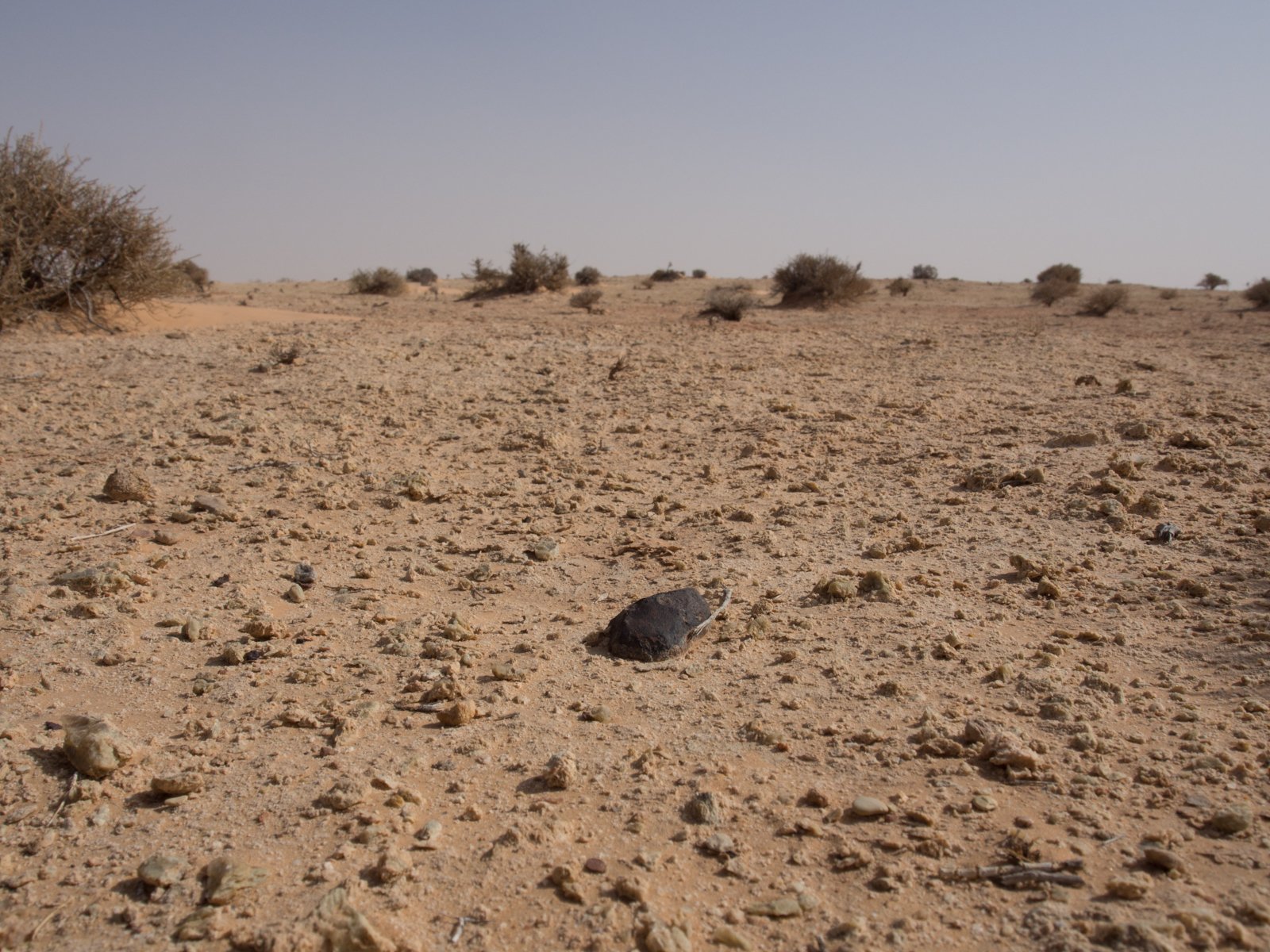
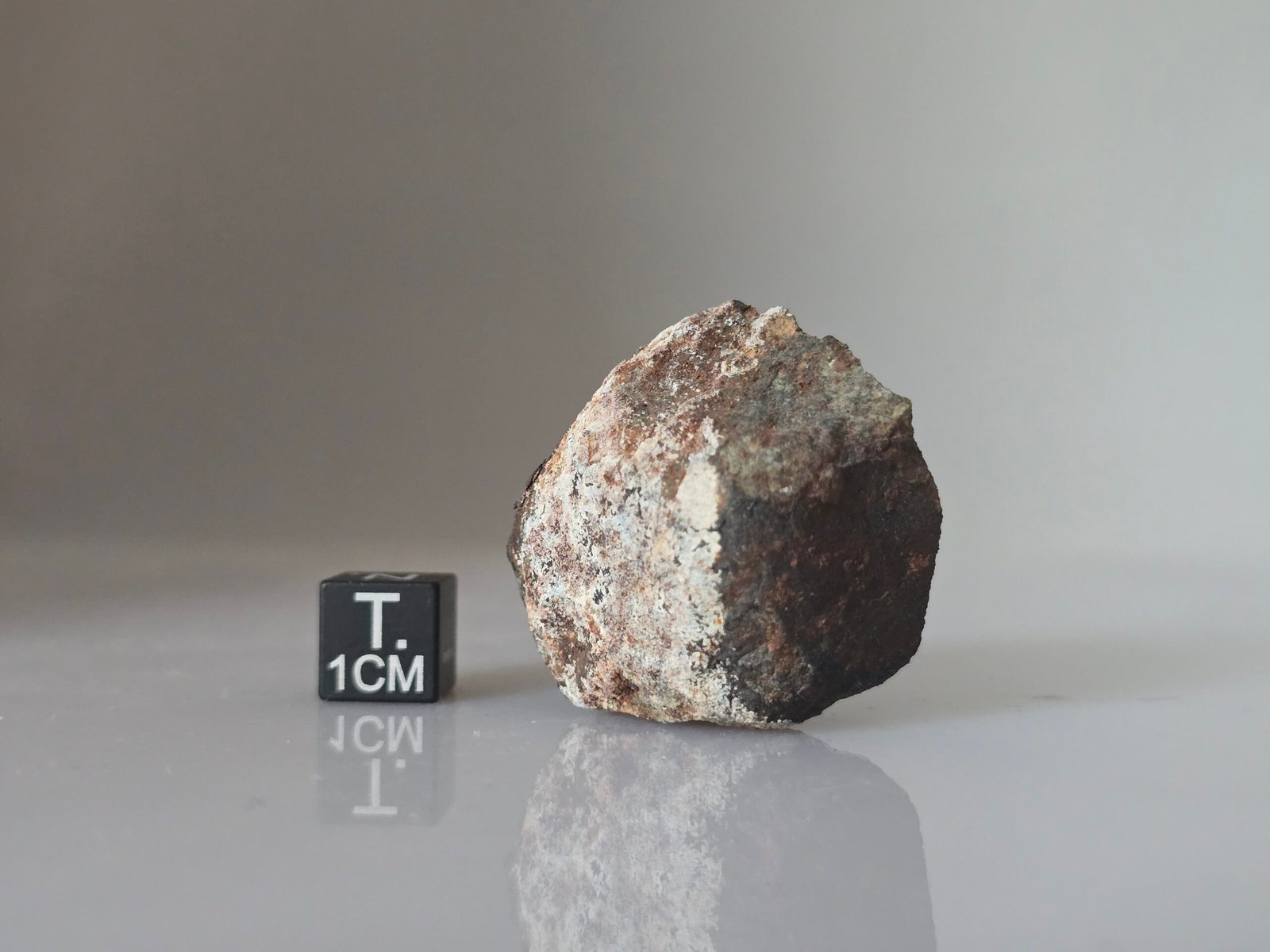
Here is a nice endcut of Beni M’hira weighing 39g. Added to this sale is an old Roman coin found in the strewnfield of Beni M’hira ! A rare combo. GPS point of the 2 finds will be included.
Beni M’hira
Tataouine, Tunisia
Fell 2001 January 8, 3:00 hrs local time
Ordinary chondrite (L6)
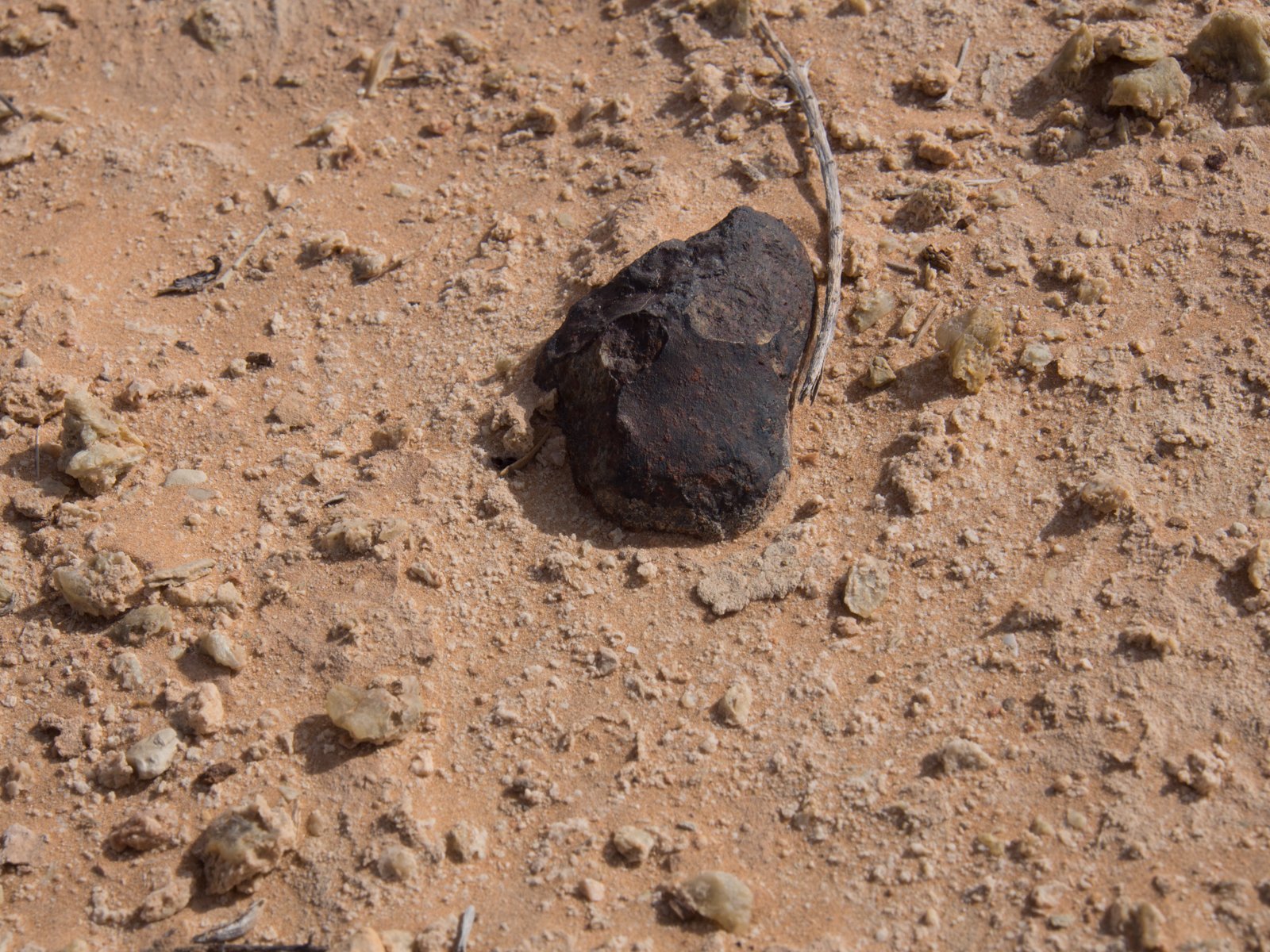
A meteorite was seen to fall in the Beni M’hira region by the inhabitants of Ksar Beni M’hira, a small village ~35 km E of Foum Tataouine, (SE Tunisia). Three fragments weighing 1720, 300, and 200 g were recovered after the fall by local soldiers. An additional 7 pieces totalling >14 kg were later recovered by private finders. Classification (L. Folco, MNASI; N. Perchiazzi, MSNP; N. Laridhi Ouazaa, UTunis): olivine Fa24.3, orthoenstatite Fs21.4, shock stage S5, weathering grade W0. Magnetic susceptibility (P. Rochette, CEREGE), expressed as the decimal logarithm of apparent mass specific susceptibility (χ; in 10−9m3kg−1), is log χ = 5.01 ± 0.02. Specimens: 2190 g UTunis; type specimen, 29.2 g, and two thin sections, MSNP, one thin section, MNA-SI; 467.7 g, MNHNP; remaining mass with private collectors.
Here is what Claude AI tells us about this coin :
This is most likely a small Late Roman bronze coin (AE3 or AE4), struck between the 4th and early 5th centuries AD.
Visible features
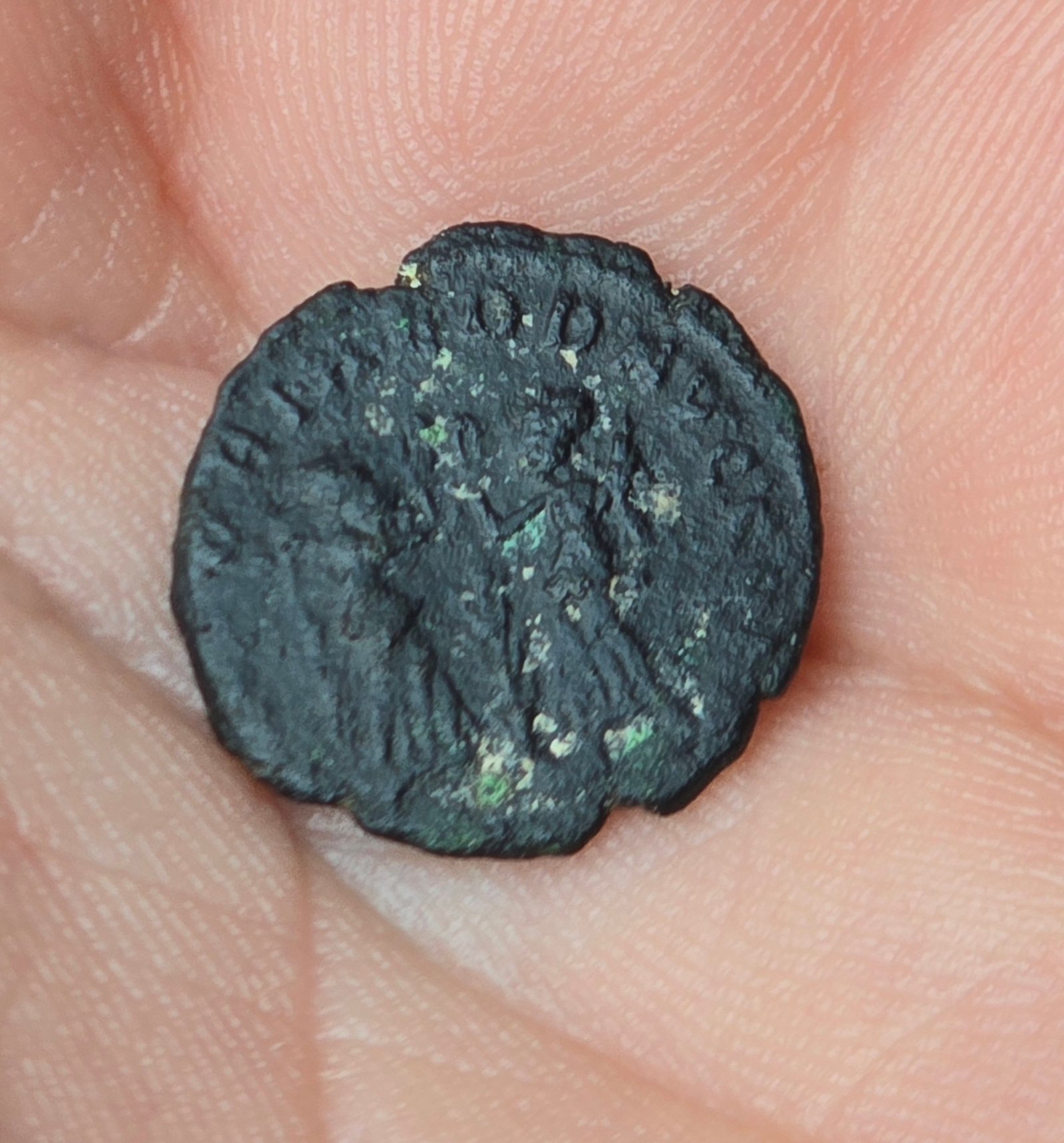
Reverse (image 1): A standing figure is visible—likely a soldier, Victory, or an emperor—accompanied by what appears to be a partially legible circular legend. The posture suggests common types such as:
GLORIA EXERCITVS (soldier with standard)
VICTORIA AVGG (Victory advancing)
FEL TEMP REPARATIO (soldier striking down an enemy)
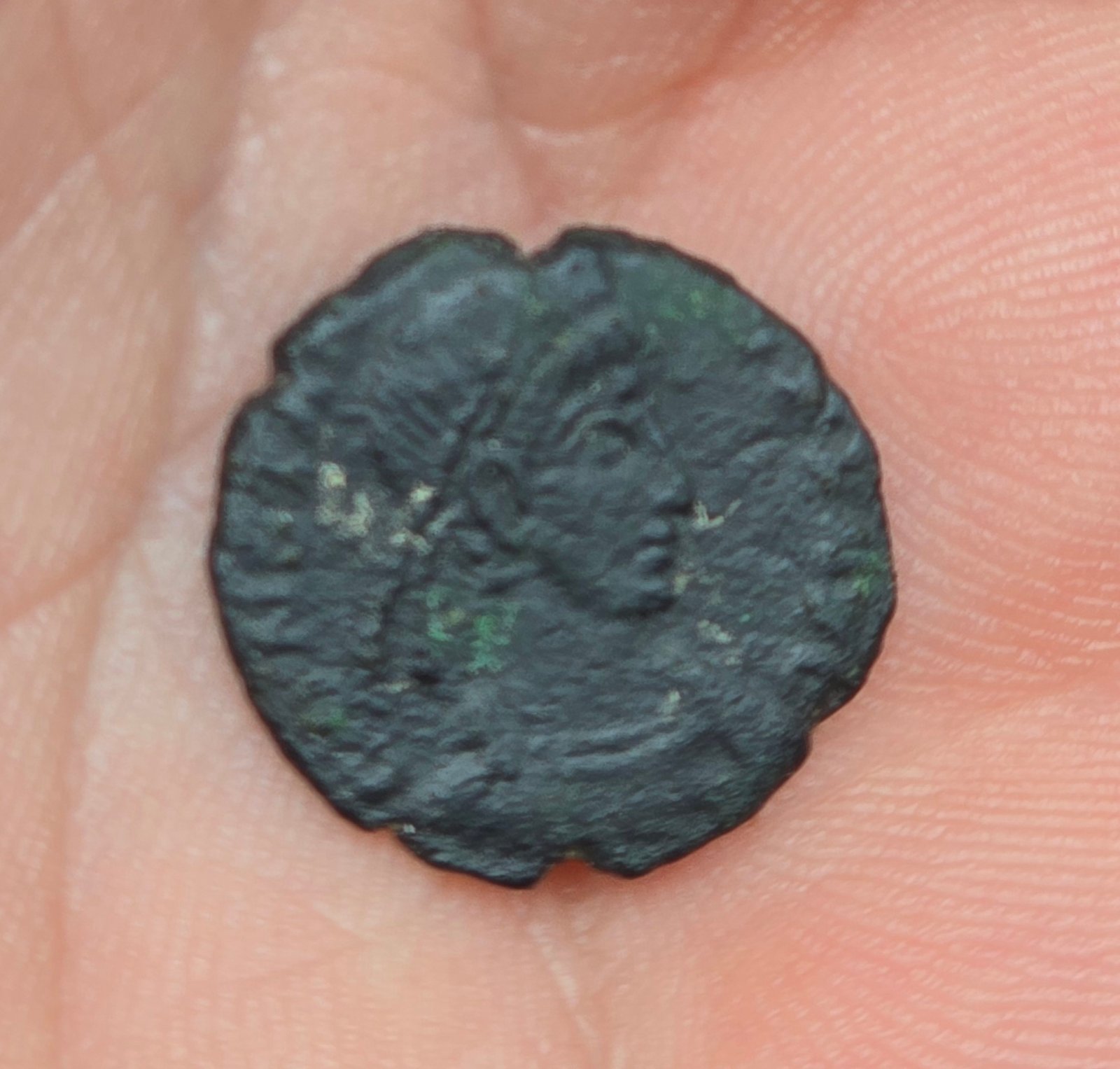
Obverse (image 2): A draped imperial bust facing right can be made out, featuring what looks like a diadem or a radiate crown.
Tunisian context
Tunisia (formerly *Africa Proconsularis*) was a very active Roman province. This type of small bronze coin circulated widely during the Constantinian and post-Constantinian eras (Constantine I, Constans, Constantius II, Valentinian, etc.).