


Description
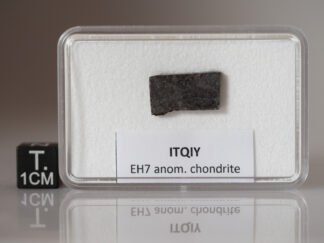
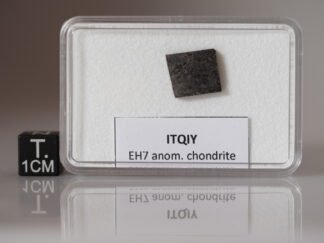
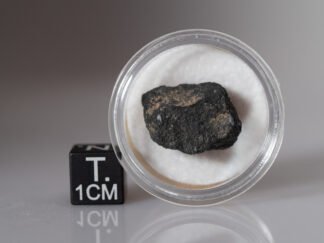
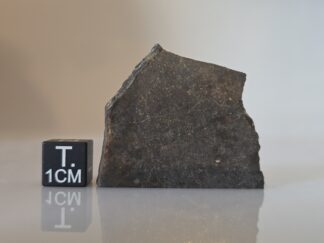
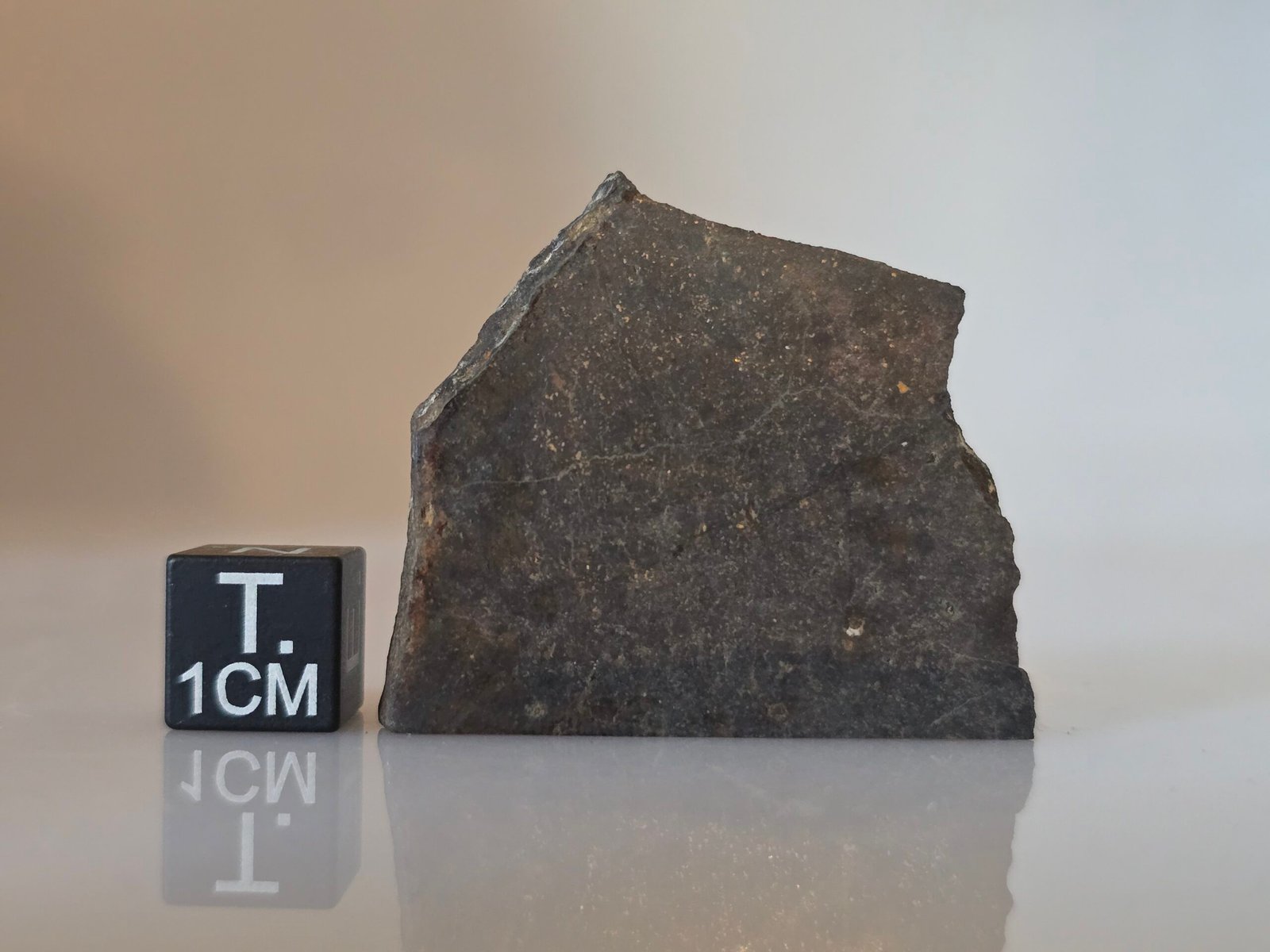
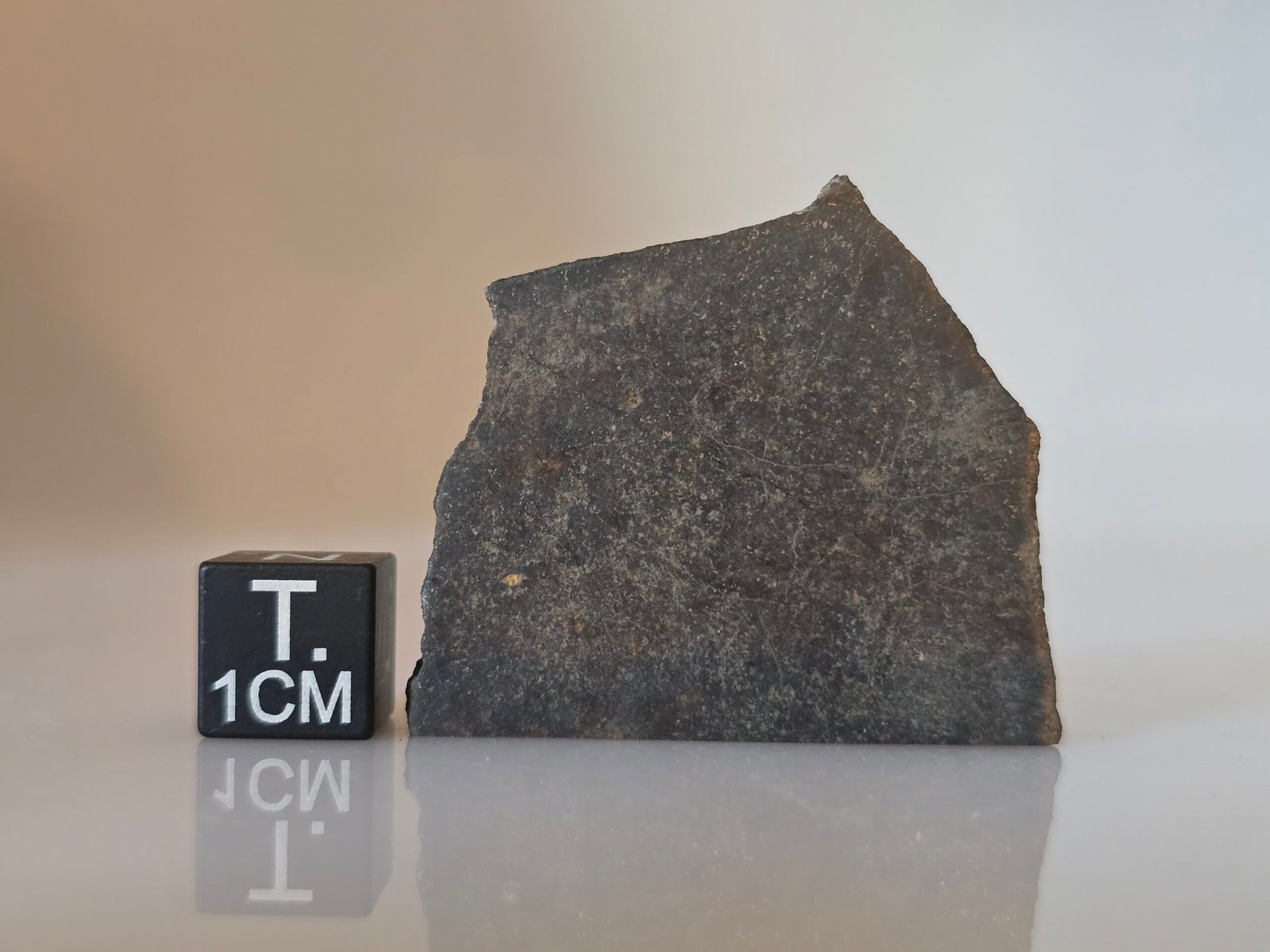
12.9g part slice. Hard to get meteorite. Sold in a box with label/certificate.
On Tuesday, June 30, 1903, at 9:00 p.m., numerous witnesses—primarily located within the Vannes–Rennes–Saint-Brieuc triangle—observed a meteor leaving a long, luminous trail behind it. It was even spotted as far away as Deauville, in Normandy!
Accounts were contradictory: some saw it pass over Saint-Brieuc, while others saw it over Vannes and Le Palais (on Belle-Île-en-Mer). Similarly, reports cited varying trajectories—either west-to-east or southeast-to-northwest. An article in the *Nouvelliste du Morbihan* dated July 5, 1903, stated that the meteorite had fallen in a field at Saint-Niel, near Pontivy, though no further details were provided…
Some articles even disagreed on whether the event occurred on a Tuesday or a Wednesday. However, an article published in *L’Ouest-Éclair* on July 2, 1903, confirmed that the meteor was indeed seen on Tuesday evening—specifically, June 30.
Also in 1903, E. Le Gall de Kerlinou presented a report in the *Bulletin de la Société Polymathique du Morbihan*. He compiled all the collected testimonies but was still unable to confirm that a meteorite had actually struck Breton soil.
It was not until 1912 that a connection was made between this 1903 fireball and a meteorite discovered in 1911 by a farmer ploughing his field at the Kermichel farm in the commune of Limerzel. The stone weighed 2,920 grams. Naturally, it showed signs of weathering from its time in the ground, indicating that the fall had not been recent. Knowledge of this discovery is due to the Marquis de Mauroy; the landowner sold the stone to the Marquis in 1912, who then reported the existence of this celestial object to the Academy of Sciences in Paris. An avid collector of minerals and meteorites, he retained the bulk of the meteorite but donated a 101-gram fragment to the Natural History Museum in Paris, and later gave another 65-gram piece. He also provided a sample to the Troyes Museum and another to the Vatican Museum. This is hardly surprising, given that the Marquis de Mauroy was the curator of the Troyes Mineralogical Museum as well as the founder of the Vatican’s natural history museum.
The *Meteoritical Bulletin* still classifies Kermichel not as an observed fall, but as a find made in 1911.
While a definitive link between the 1903 meteor and the 1911 find cannot be absolutely guaranteed, the fireball’s trajectory and the meteorite’s discovery site align well, as do the explanations provided in the available written records.