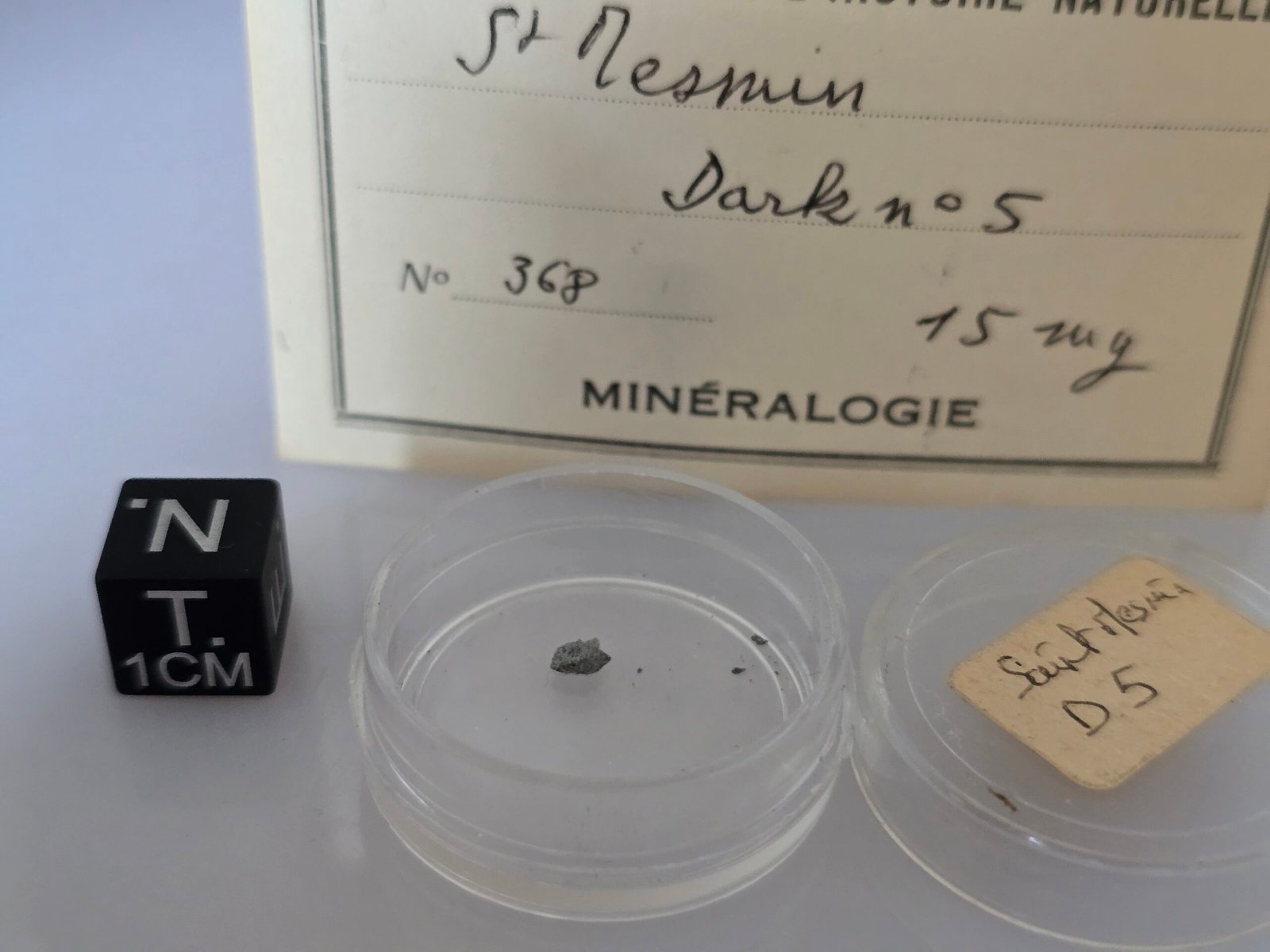
Description
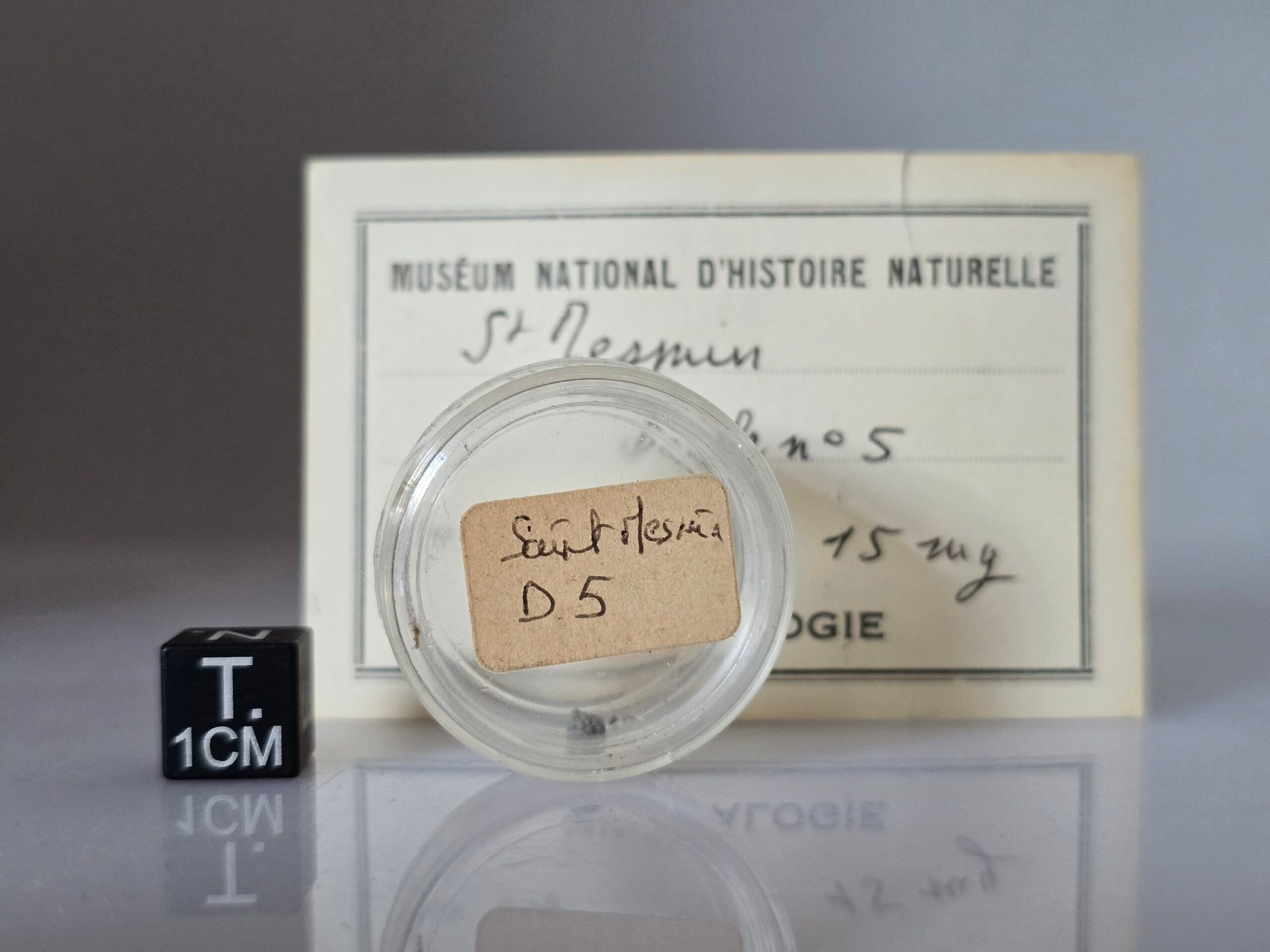
15mg fragment with original label from Museum of Paris ! Very hard to find meteorite and greatest provenance. Sold with original box, labels and certificate.
The Saint-Mesmin meteorite is a well-documented meteorite fall that occurred in northeastern France in the 19th century.
Date of fall: 30 May 1866
Location: Saint-Mesmin, near Nogent-sur-Seine, in the Aube department of France
Type: Ordinary chondrite, classified as LL6
Observed fall: Yes
Recovered mass: Approximately 8.3 kg
Number of recovered stones: Several stones weighing about 4.2 kg, 2.2 kg, and 1.9 kg
Witnesses reported a bright fireball (bolide) crossing the sky, followed by loud detonations. Shortly afterward, three meteorite fragments were recovered near Saint-Mesmin. The event was significant enough that contemporary reports were written almost immediately after the fall, including a scientific notice by Brabant in 1866.
Saint-Mesmin is classified as an LL6 ordinary chondrite.
The meteorite attracted considerable scientific attention because it contains dark clasts that differ from the surrounding LL6 material. Researchers interpret the stone as a regolith breccia—a rock formed from fragments mixed together on the surface of an asteroid and later lithified.
One French museum exhibit describes Saint-Mesmin as containing a fragment of a different meteorite embedded within the LL parent material. According to this interpretation, an impact on the surface of the LL parent asteroid incorporated foreign material into the regolith before the rock was eventually ejected and sent into an Earth-crossing orbit.